Language is a fascinating organism. It might seem rigid, especially after consulting a grammar book or a dictionary, but over millenia it mutates and adapts, both randomly and through the need to describe new objects.
Today, we’ll talk bears.
Going back
Where do they come from? My standard approach is to consult the wiktionary, which tells us the word comes from Proto-Germanic *berô, an ancestor also to beer (Dutch), Bär (German) and bjørn (Danish). The Proto-Germanic word, in turn, either came from the Proto-Indo-European (PIE) *bʰerH- (grey, brown) or, alternatively, *ǵʰwer- (wild animal).
This is all fun but it doesn’t tell us what the PIE word for bear is. We can try a different modern language and trace the origin of bear there. I happen to speak Slovak and there the word is medveď. It comes from the Proto-Slavic *medvědь, which derives from a compound of *medъ and *(j)ěsti, a honey eater. The descendants are medvédʹ (Russian) and niedźwiedź (Polish), among others.
We hit a dead end again, still no PIE word for bear. No matter. El oso is how you say bear in Spanish. This comes from ursus (Latin), orssos (Proto-Italic), and *h₂ŕtḱos (PIE). Finally!
He Who Must Not Be Named
Word *h₂ŕtḱos gave birth to ari (Albanian), ḫar-tág-ga-aš (Hittite), arǰ (Armenian), art (Old Irish), árktos (Greek), ṛ́kṣa (Sanskrit), as well as ours, orso, urs (various Romance languages). Quite a lot of languages still using the same word, that’s natural. But why did Germanic and Slavic languages get rid of it? Well, let’s look at the bear populations.
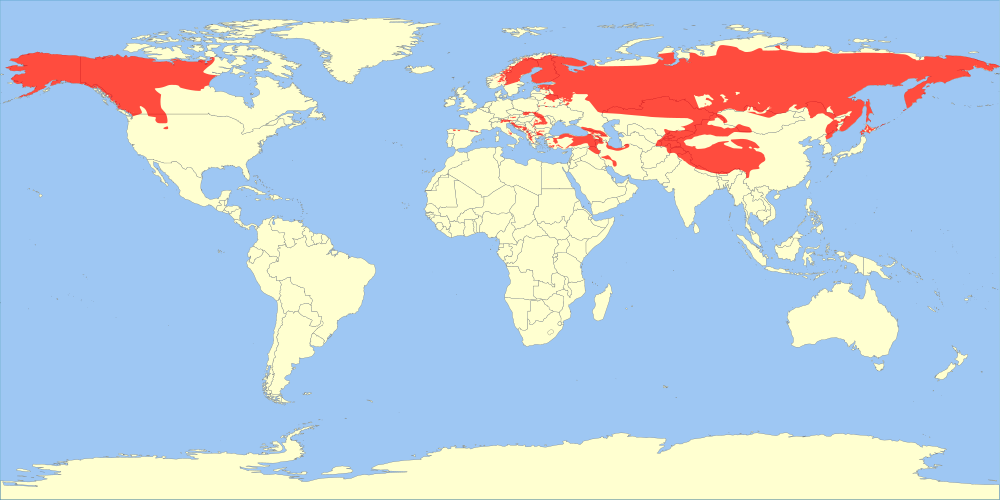
What should strike you is that bears tend to live in many Germanic and Slavic countries but not so much in Romance or Indo-Iranian countries, so their incidence correlates well with the disuse of the original PIE word. The theory why this happened is taboo avoidance. Bear can be a powerful enemy and by uttering its name, you might summon it to your doorstep. Not only that, the PIE word for bear is related to words which mean destroying or destruction. Thus people had to find other names to avoid speaking of the devil.